Poster to be
presented in Tucson 2006 (4-8 April)
Author: José Monserrat Neto
Contact: rijik at ufla.br
Picture 1: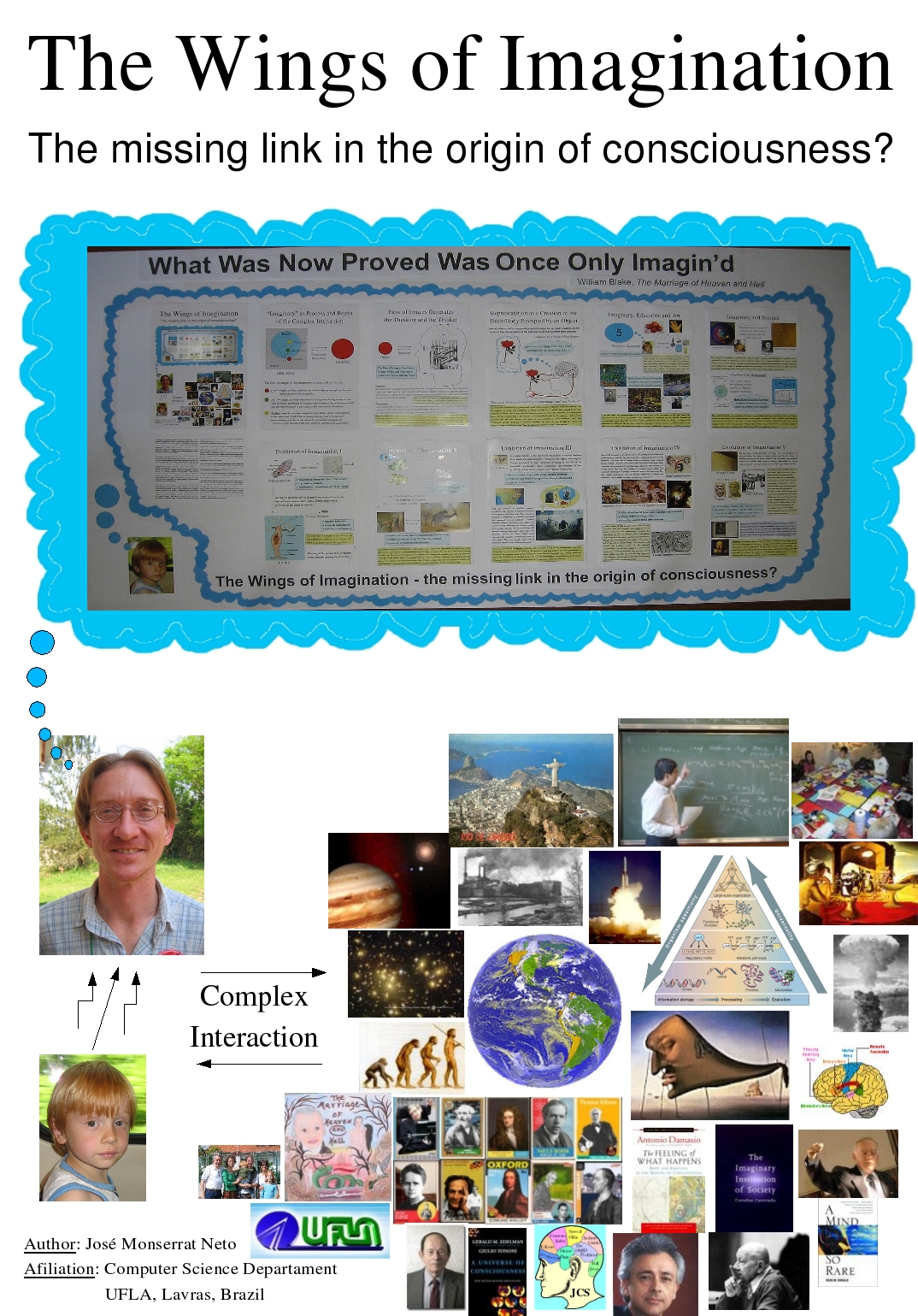
ABSTRACT
Consciousness is examined through the focus of the imagination which,
traditionally, means the 'capacity' to create fictions about reality
and the 'fantasies' themselves created. Here, however, imagination is
viewed at the core of the origin of consciousness. Following
James' approach – mind as a continuous flow of mental images –
imaginary is proposed to be both a process and result of the
organism-object relationship, the source of the imagination
(Castoriadis). A perspective that views consciousness through the
evolution of imagination is sketched.
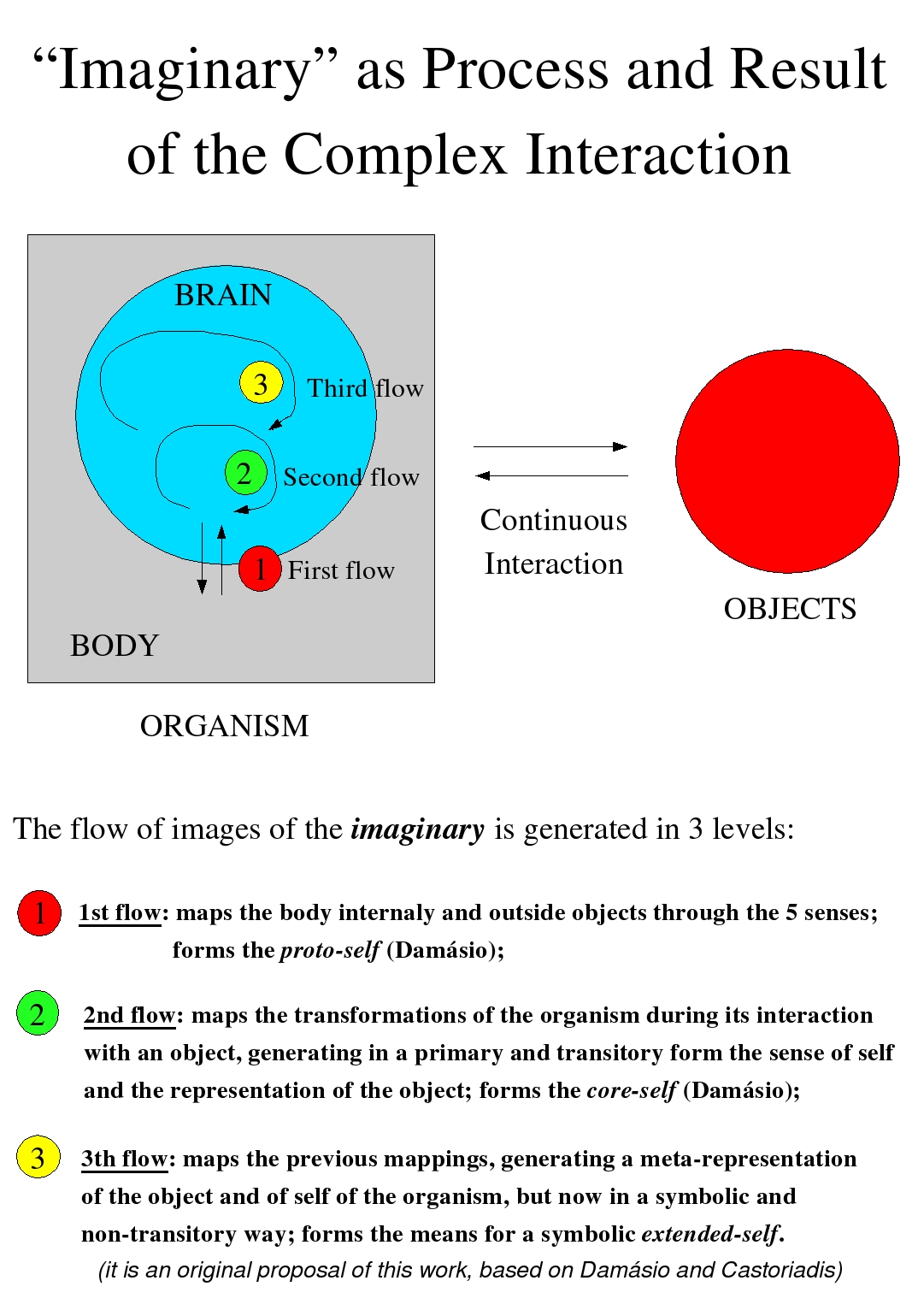
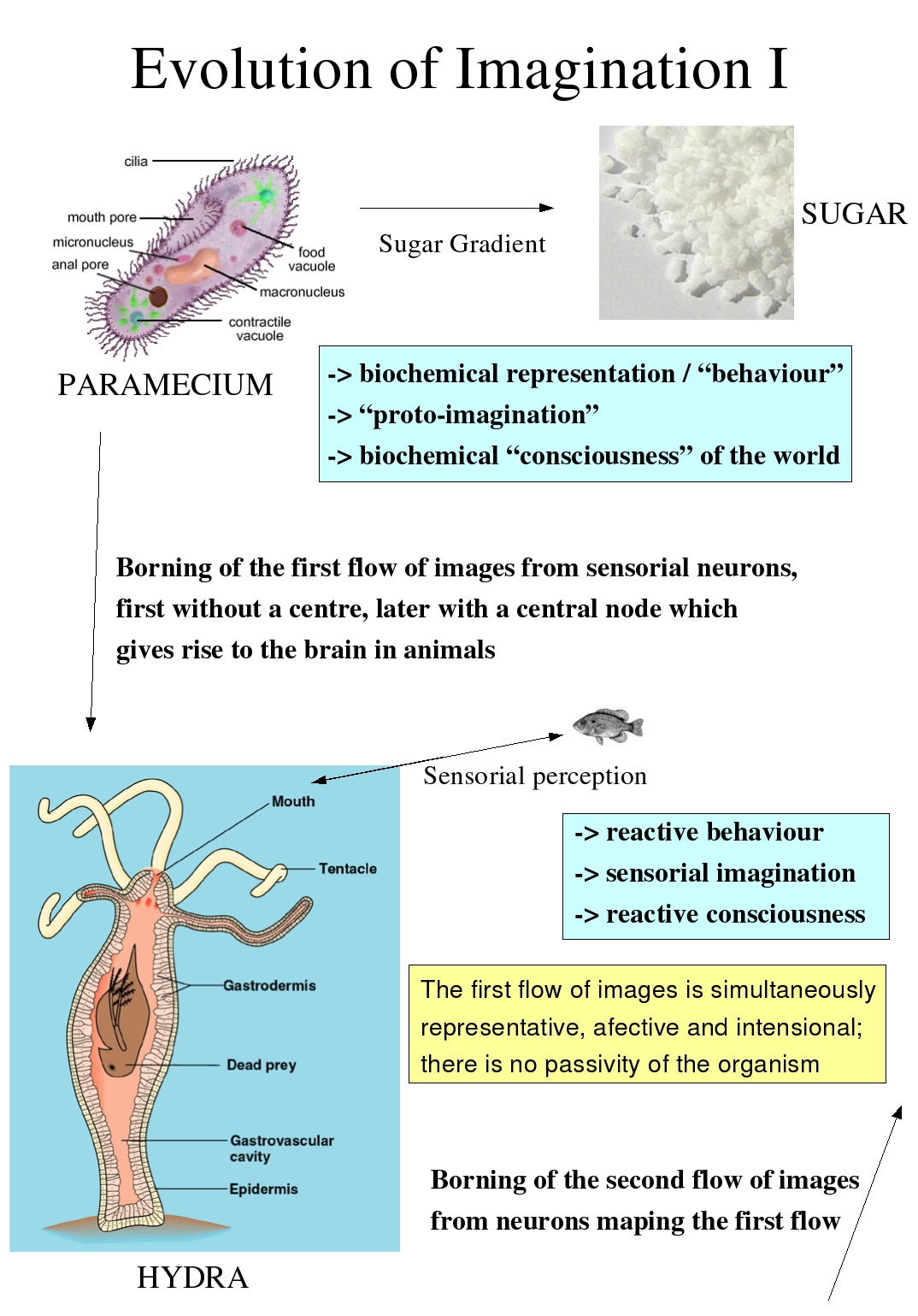
The imaginary (organism-object relationship) is generated in three
levels. The first order flow maps the organism and the environment. The
second one maps the transformations of the organism during its
interaction with an object, generating in a transitory form the sense
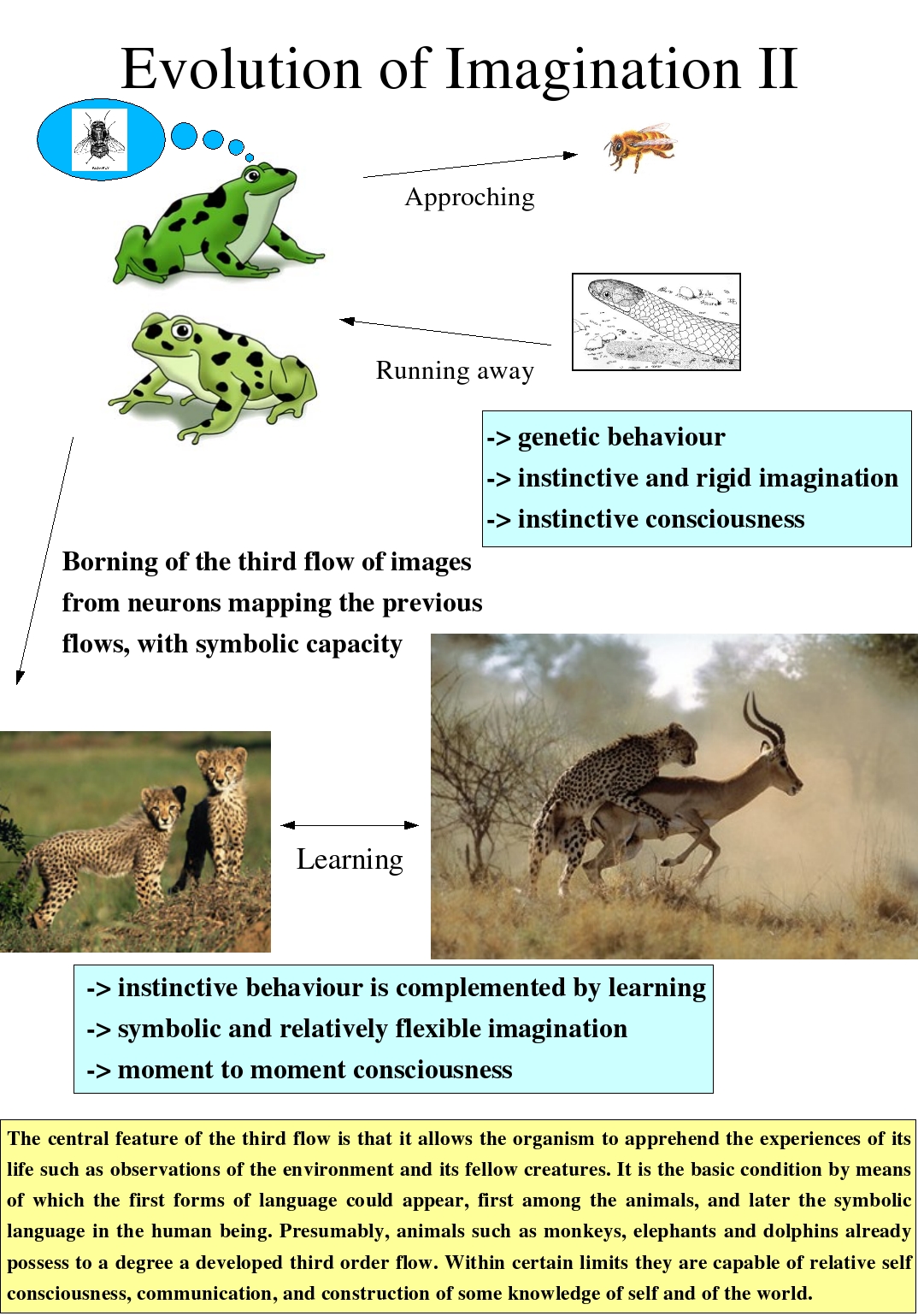
of self and the representation of the object. The third order flow maps
the previous mapping, generating a meta-representation of the object
and self, but in a symbolic and non-transitory form. The third level is
hypothetical but suggested to explain the extended capacity of
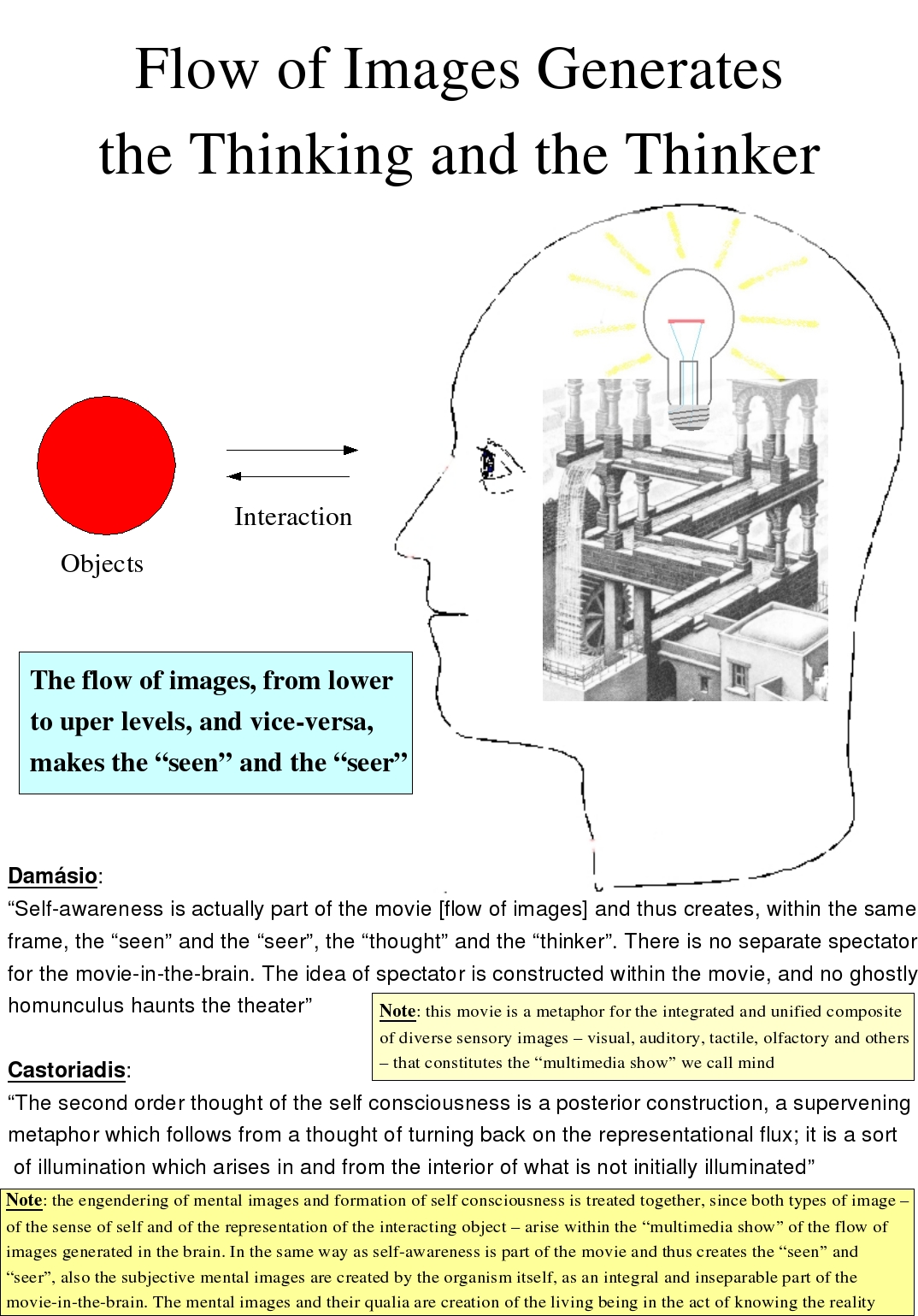
imagination in higher animals. The imaginary engenders both the sense
of self and the representation of the interacting object as mental
images, creating “what is seen” and “what sees”, the “thinking” and the
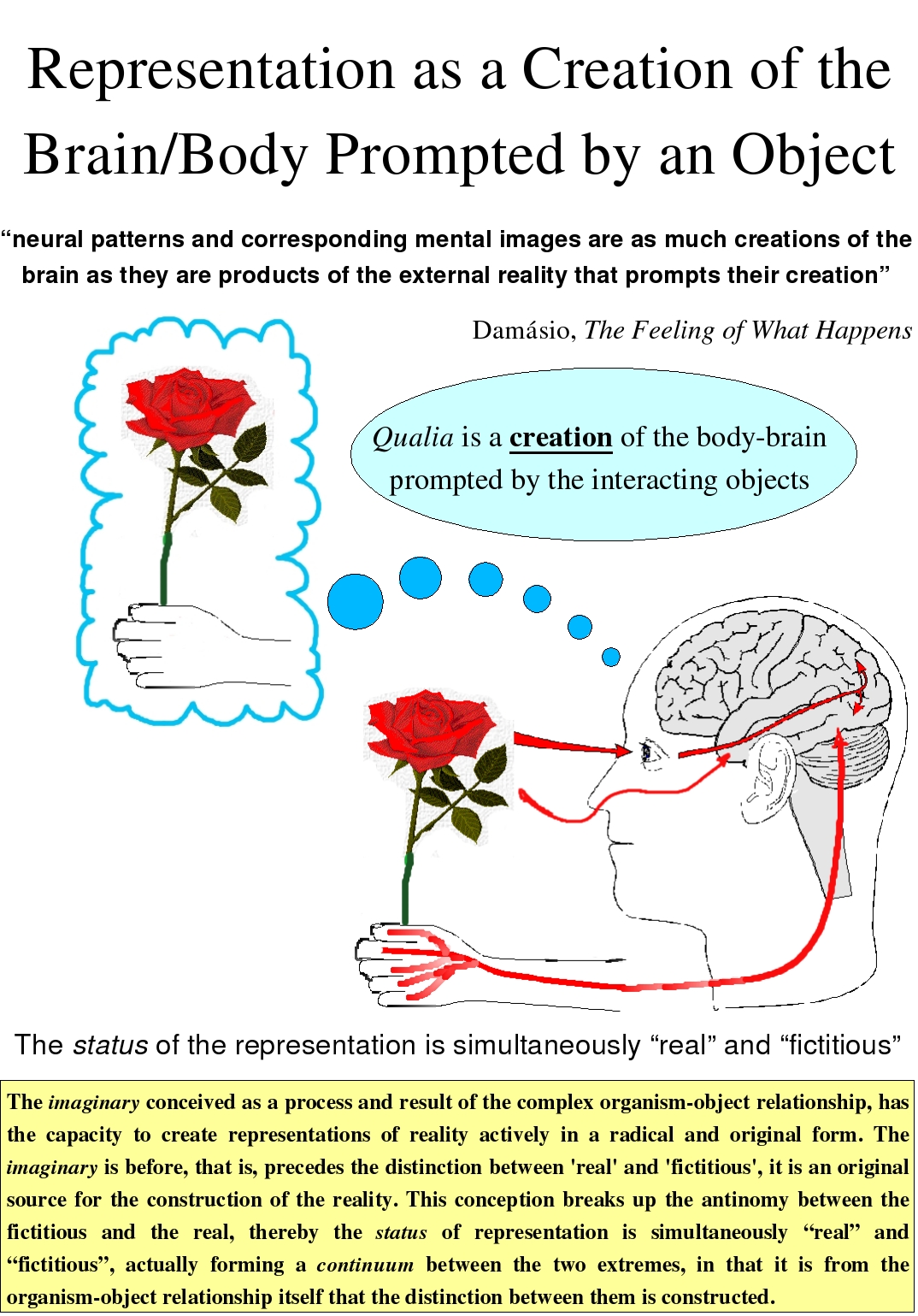
“thinker” (Damásio). Mental images and their qualia –
representations – are regarded as being born from within the imaginary
as a 'genuine creation' of the living being, prompted by the
interacting objects.
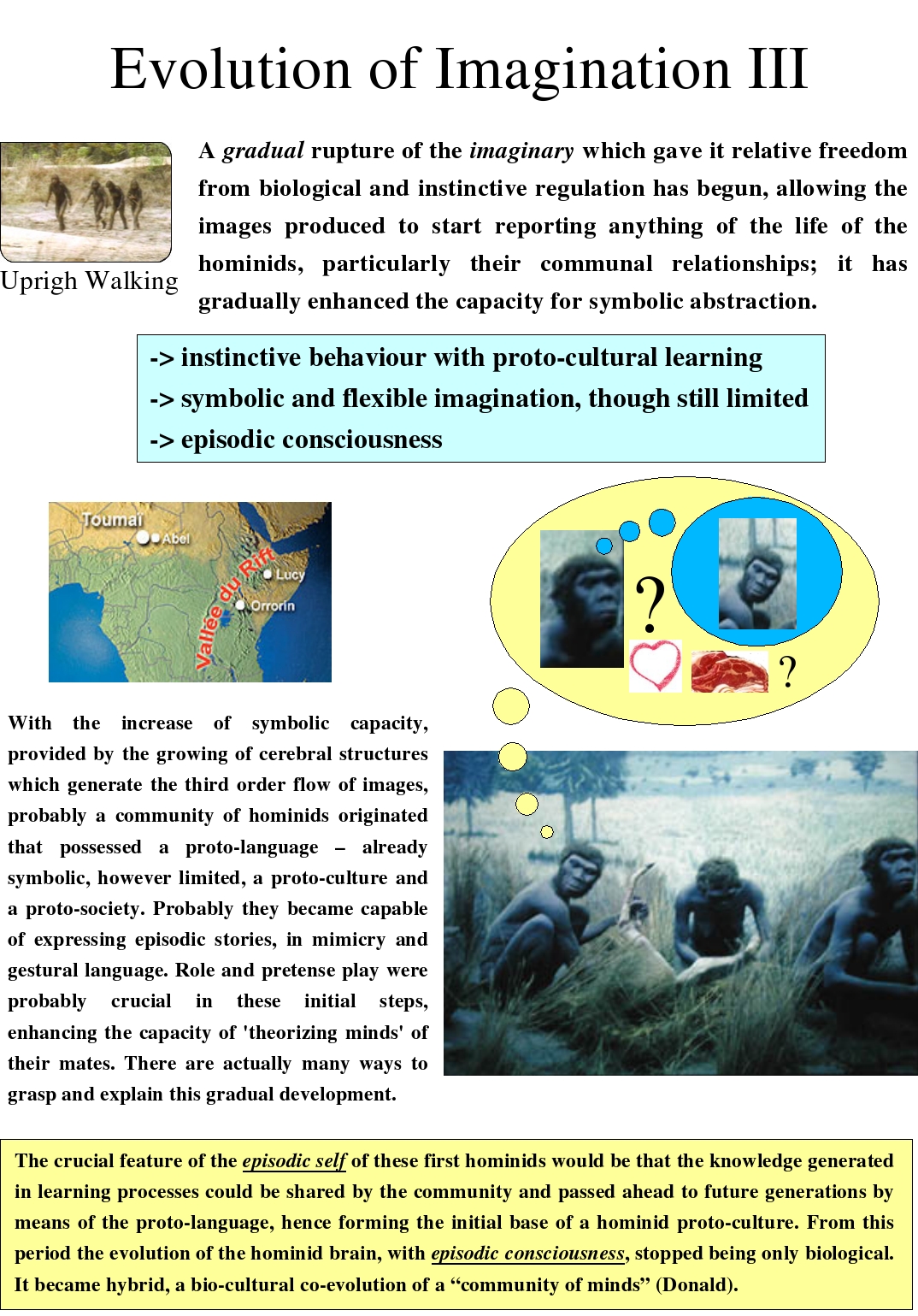
The imaginary of others animals is mostly dedicated to find food, self
preservation and procreation. The hominids' imaginary suffers a gradual
rupture and loses function in terms of strict biological needs. It
becomes relatively autonomous and capable of disconnecting itself from
external things of here and now, and may turn back on itself: the
object of the imaginary becoming the imaginary itself. This capability
made possible the creation of images from images in a recursive cycle
without any precedents in the biological world. The human consciousness
arises as an outcome of a reciprocal and recursive interaction between
the imaginary of each human being and the imagination already
instituted previously and collectively in language, culture and society.
A hypothetical scenario for the evolution of imagination is sketched,
explaining the emergence of first humans. From core self that composes
the 'swift' primary consciousness (Damásio), this would have
evolved to an episodic narrative consciousness, already symbolic, but
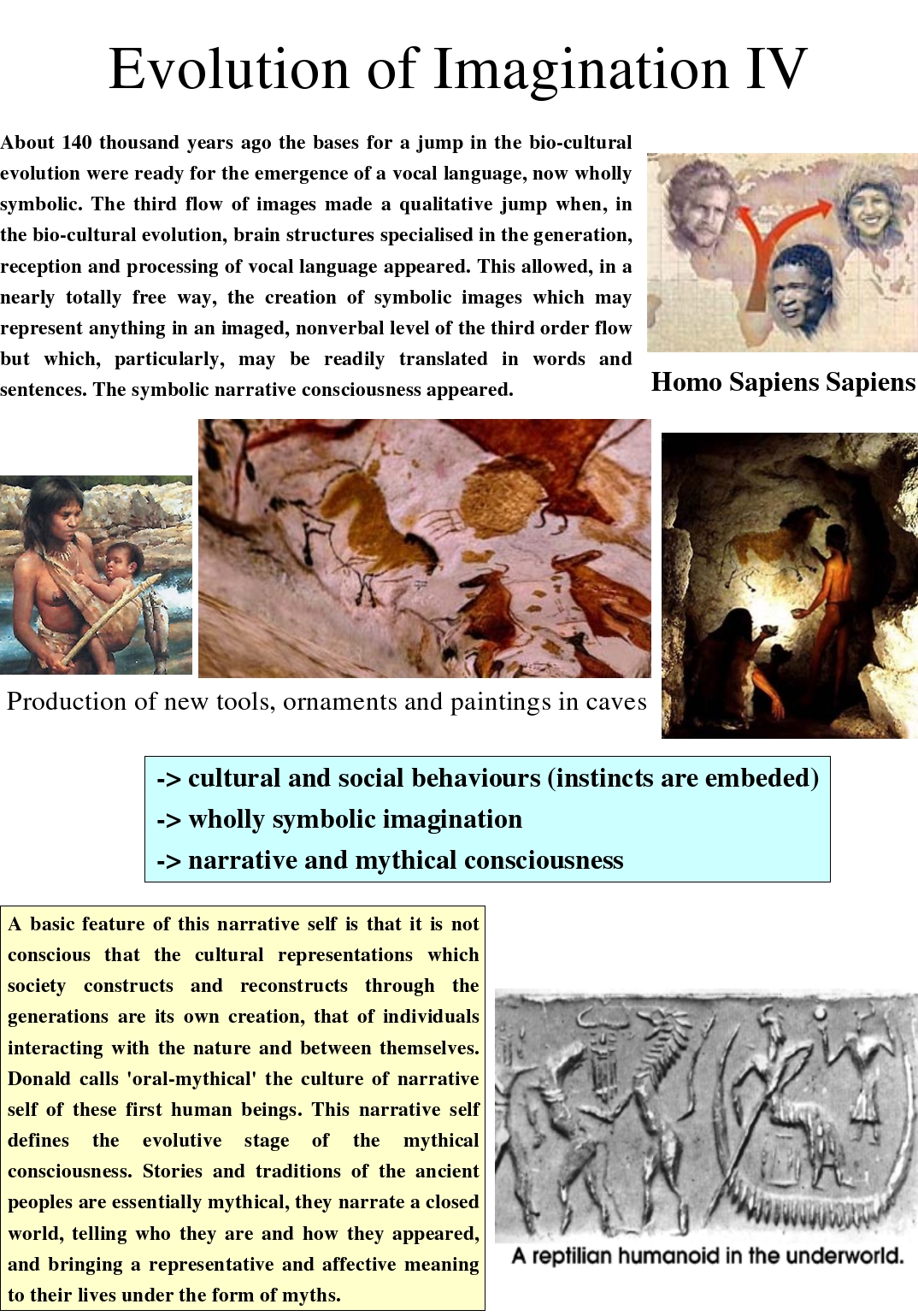
limited. Later, through a 'community of minds' (Donald), and with the
evolution of vocal language, a wholly symbolic but mythical narrative
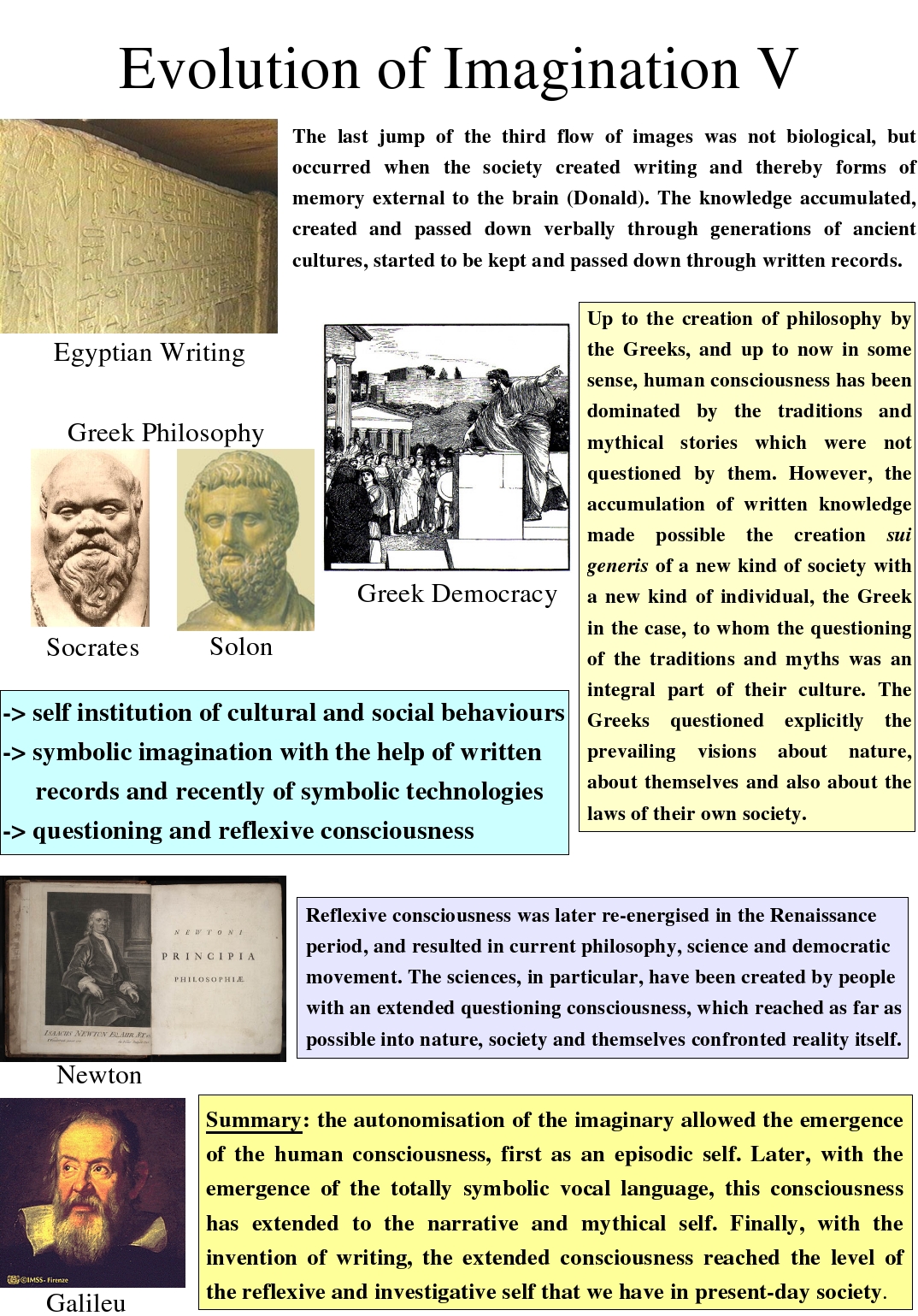
consciousness evolved. Lastly, with the creation of written records,
came the reflexive consciousness of present-day humans.
The view of mind as a flow of images in three levels, and as a process
and result of the organism-object relationship (imaginary), seeks to
break up the antinomy between subjectivity and objectivity, and to
regard the status of representation as simultaneously “real” and
“fictitious”.
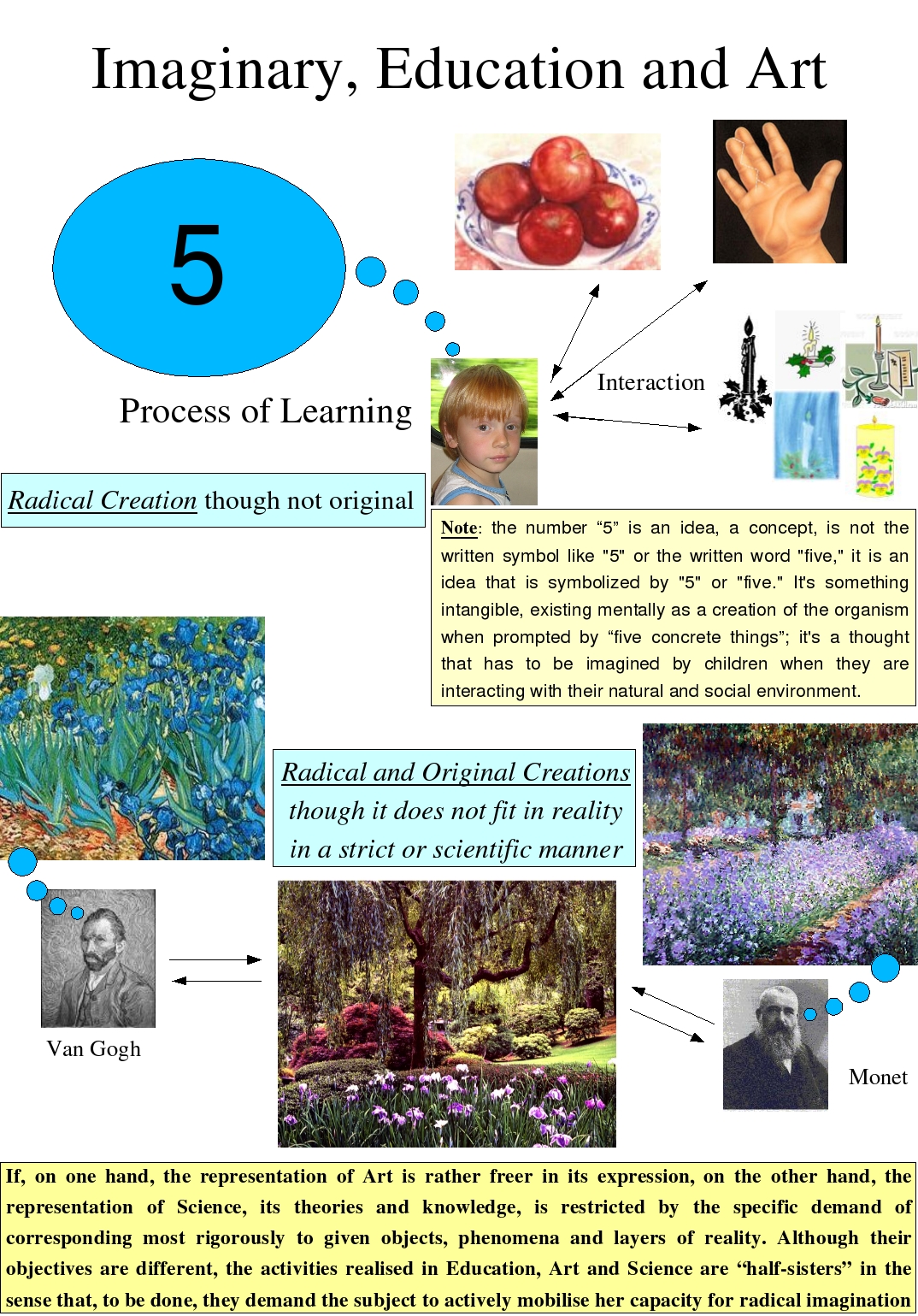
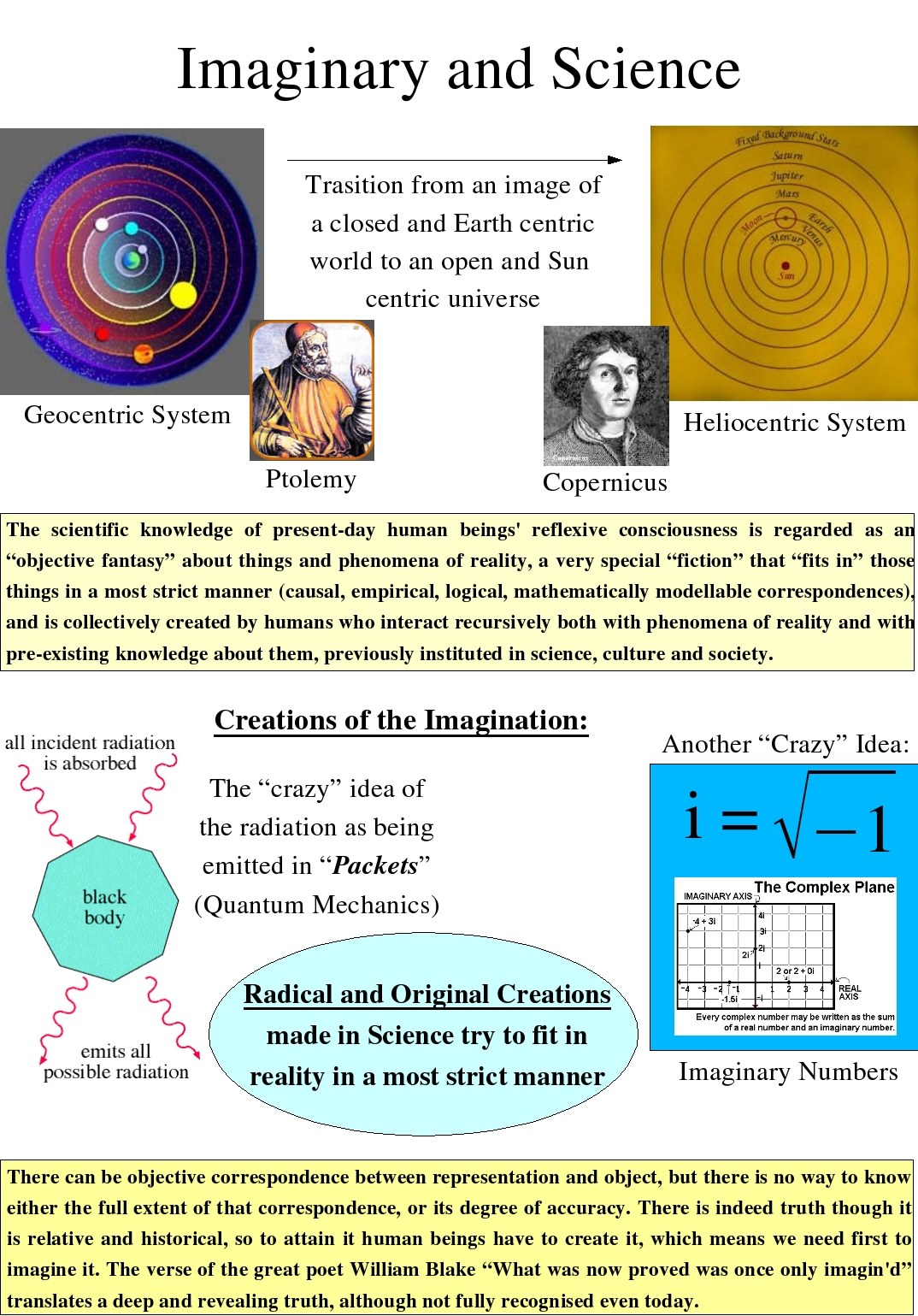
Finally, the role of imagination in education, art and science is
analysed, and shown to be essential for understanding the creative way
in which human beings learn and (re)construct their reality.
COMMENTS
This work is mainly based on Castoriadis' thesis of the creative power
of the imaginary, on Damásio's theory of the emergence of self
consciousness, and on Donald's description of the bio-cultural
evolution of consciousness.
The perspective sketched here needs to be evaluated and developed more
widely in order to prove its validity. There is so far no empirical
evidences that prove the existence of the third order flow of images,
and its power to create symbolic representations, but it might be
empirically testable. From works of Edelman, Baars, Mithen, McCrone,
Tononi, Boden, Fauconnier, Lakoff, Harris, Shanahan, Hesslow, and
several other researchers, such scientific experiments might be
imagined and realized.
Picture 2
Picture 3
Picture 4
Picture 5
Picture 6
Picture 7
Picture 8
Picture 9
Picture 10
Picture 11
The full paper text of "The Wings of Imagination" can be downloaded
here: Wings